

Do you wake up with a stiff neck, or feel a dull ache after hours at your desk? Muscular neck pain is more common than you think, and it can really affect your day-to-day life. The good news is that with the right care, most people can find relief and get back to moving comfortably.
Neck pain often comes from the muscles around your neck and shoulders being overworked, tight, or strained. Some of the most common causes include poor posture when sitting or looking at screens, repetitive movements at work, carrying stress in your body, sleeping in awkward positions, or injuries from accidents or sports. Even small habits, like hunching over a phone or laptop, can slowly lead to stiffness and discomfort.
How do I know if I have strained my neck muscles?
Some of the symptoms of muscular neck pain include:
A dull ache or soreness at the back or sides of your neck
Tight muscles that feel knotted or tender
Difficulty turning or moving your head
Headaches that start at the base of your skull
Sometimes, tingling or numbness if a nearby nerve is affected

How can physiotherapy help muscular neck pain?
At First Line Physio, we understand that every neck pain story is different. Our expert physiotherapists take the time to find the root cause of your pain and create a plan that works for you.
This may include hands-on treatment to release tension, exercises to strengthen weak muscles, and practical advice for your posture at work and home.
We don’t just treat symptoms. We help you understand your body so you can prevent pain from coming back. Our goal is to get you moving comfortably, enjoying your day without constant stiffness or discomfort.

What exercises can I try for muscular neck pain?
Here are some simple exercises you can try, that may help to ease muscular neck pain. They only take a few minutes a day and can make a big difference to your symptoms, movement and overall function.
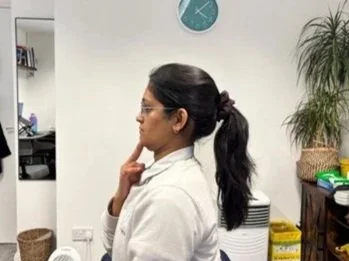
Chin Tucks
Sit or stand tall.
Gently pull your chin straight back as if making a double chin.
Hold for 5 seconds and repeat up to 10 times.
This strengthens the deep muscles in your neck and helps improve your posture.
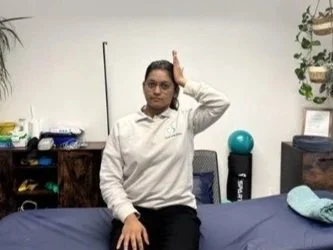
Neck Isometrics
Place your hand on side of your head.
Push your head sideways into your hand gently, but resist the movement with your hand, so your head doesn’t move.
Hold this for 5–10 seconds, then relax.
Repeat 5–10 times on each side.
This helps to strengthen the muscles either side of your neck.
This is absolutely not written to substitute medical advice, and it is always important to see a qualified healthcare professional for a formal diagnosis. If any of the exercises cause pain during or after the exercise, discontinue and consult a physiotherapist.
If you would like to get in touch, please visit our contact page.