
Why does my hand keep going numb? Understanding cubital tunnel syndrome

Have you noticed tingling in your ring finger and little finger, especially after talking on the phone or sleeping with your elbow bent? Maybe your hand feels weaker than it used to, or you keep dropping things for no obvious reason. If this sounds familiar, you could be experiencing cubital tunnel syndrome.
Cubital tunnel syndrome is one of the most common causes of numbness and tingling in the hand. The good news is that, in many cases, it can be managed successfully with physiotherapy and simple changes to your daily routine.
What is Cubital Tunnel Syndrome?
Cubital tunnel syndrome happens when the ulnar nerve becomes irritated or compressed as it passes around the inside of your elbow. This is the same nerve that creates the funny bone sensation when you accidentally knock your elbow.
The ulnar nerve travels from your neck, down your arm, and into your hand. It provides feeling to your little finger and part of your ring finger, while also controlling several important muscles that help with grip and fine hand movements.
When this nerve is under pressure, it can become irritated and start producing symptoms in your arm and hand.
What causes Cubital Tunnel Syndrome?
There are several reasons why the ulnar nerve may become compressed:
Keeping your elbow bent for long periods is one of the most common causes. This often happens while sleeping, holding a phone, reading, or working at a desk.
Repeated bending and straightening of the elbow can also irritate the nerve over time, particularly if your work or hobbies involve repetitive arm movements.
Leaning on your elbows for long periods can increase pressure on the nerve, especially when sitting at a desk.
Previous injuries around the elbow, such as fractures or dislocations, may change the shape of the joint and increase the risk of nerve compression.
In some people, the nerve naturally moves out of its normal position when the elbow bends, making it more likely to become irritated.

What are the symptoms of cubital tunnel syndrome?
Tingling or pins and needles in the little finger and ring finger
Numbness in these fingers, particularly at night
Pain or aching on the inside of the elbow
Weakness when gripping objects
Difficulty opening jars or holding small objects
A tendency to drop items more often than usual
Symptoms that become worse when the elbow stays bent for a long time
If the condition is left untreated, the muscles in the hand may become weaker over time, making everyday tasks more difficult.
When should you see a physiotherapist tingling in the hand?
It is worth seeing a physiotherapist if your symptoms last for more than a few weeks, keep coming back, or begin affecting your daily activities.
You should also seek assessment if you notice increasing weakness in your hand, reduced grip strength, or difficulty carrying out tasks such as writing, typing, or buttoning clothes. Early treatment often leads to better results and may help prevent long term nerve damage.
How we can help at First Line Physio
At First Line Physio, our physiotherapists will carry out a thorough assessment to identify the cause of your symptoms and develop a personalised treatment plan.
Your treatment may include hands on therapy, mobility exercises, strengthening, advice on activity modification, and guidance on posture and ergonomics. Our goal is to reduce your pain, restore hand function, and help you return to your everyday activities as quickly and safely as possible.
What exercises can I do for cubital tunnel syndrome?
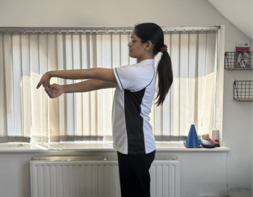
Wrist Flexor Stretch
Extend your arm with the palm facing up.
Use the opposite hand to gently pull back on the fingers, stretching the wrist.
Hold for 15-30 seconds, repeat 3 times.
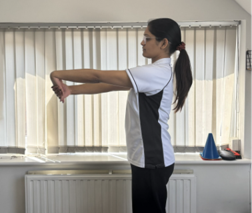
Wrist Extensor Stretch
Extend your arm with the palm facing down.
Use the opposite hand to gently push down on the back of the hand, stretching the wrist.
Hold for 15-30 seconds, repeat 3 times.
This is absolutely not written to substitute medical advice and it is always important to see a qualified healthcare professional for a formal diagnosis. If any of the exercises cause pain during or after the exercise, discontinue and consult a physiotherapist.